
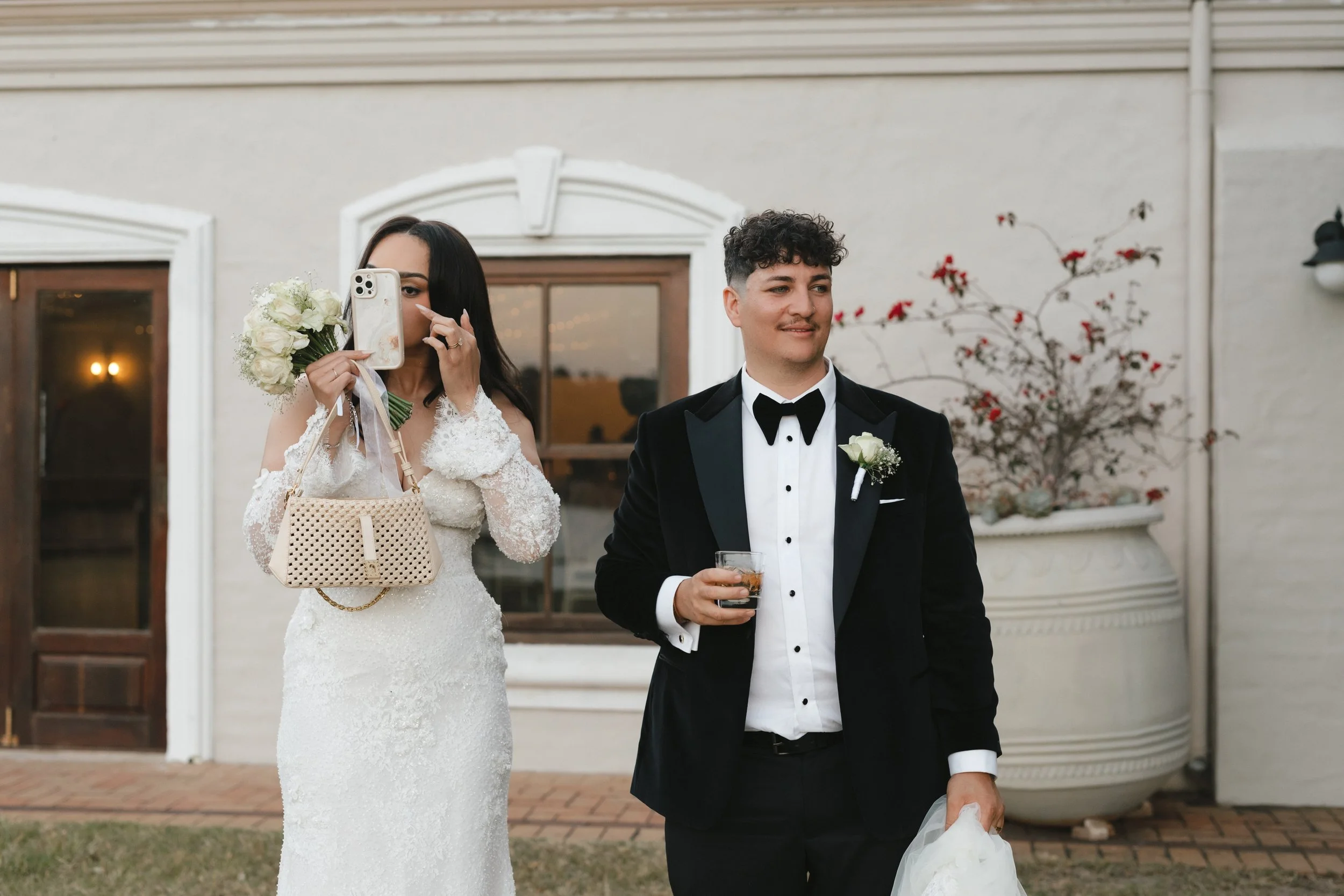
How Long Should Your Wedding Video Be?
Wondering how long your wedding video should be? Discover why a 5–7 minute highlight film works so well and when a short wedding teaser makes sense.
Wedding videos can be almost any length you want them to be.
We've seen everything from tiny social-media clips to films that are essentially feature-length productions.
But for most couples, we think there's a sweet spot somewhere in the middle.
Our favourite length: around 5–7 minutes
For a wedding highlight film, 5–7 minutes is usually long enough to tell the story of the day without becoming something you have to schedule an evening around watching.
It gives us enough time to include the important pieces:
Getting ready
The ceremony
Your vows and speeches (sometimes with sound recorded for snippets)
The people around you
The little moments
The reception
Dancing
And, obviously, the two of you
Anything much longer can start to feel more like a feature film.
Anything much shorter can sometimes leave you feeling like you've only been given a handful of highlights rather than a proper little film of your wedding day.
But what about a 30-second video?
We also offer 35-second teaser films, which are perfect if you want something short and punchy to share on Instagram or send to friends and family.
They're not intended to replace your wedding film.
They're the little trailer.
Your main film is where we have the space to actually tell the story.
We don't think longer automatically means better
It's tempting to think that a longer wedding film means you're getting more for your money.
But a good film isn't about squeezing every possible moment into the edit.
It's about choosing the moments that actually matter.
A five-minute film where every second earns its place can be far more enjoyable to watch than a 20-minute film where you're wondering when it's going to end.
So if you're deciding what length you'd like for your wedding film, 5–7 minutes is our sweet spot.
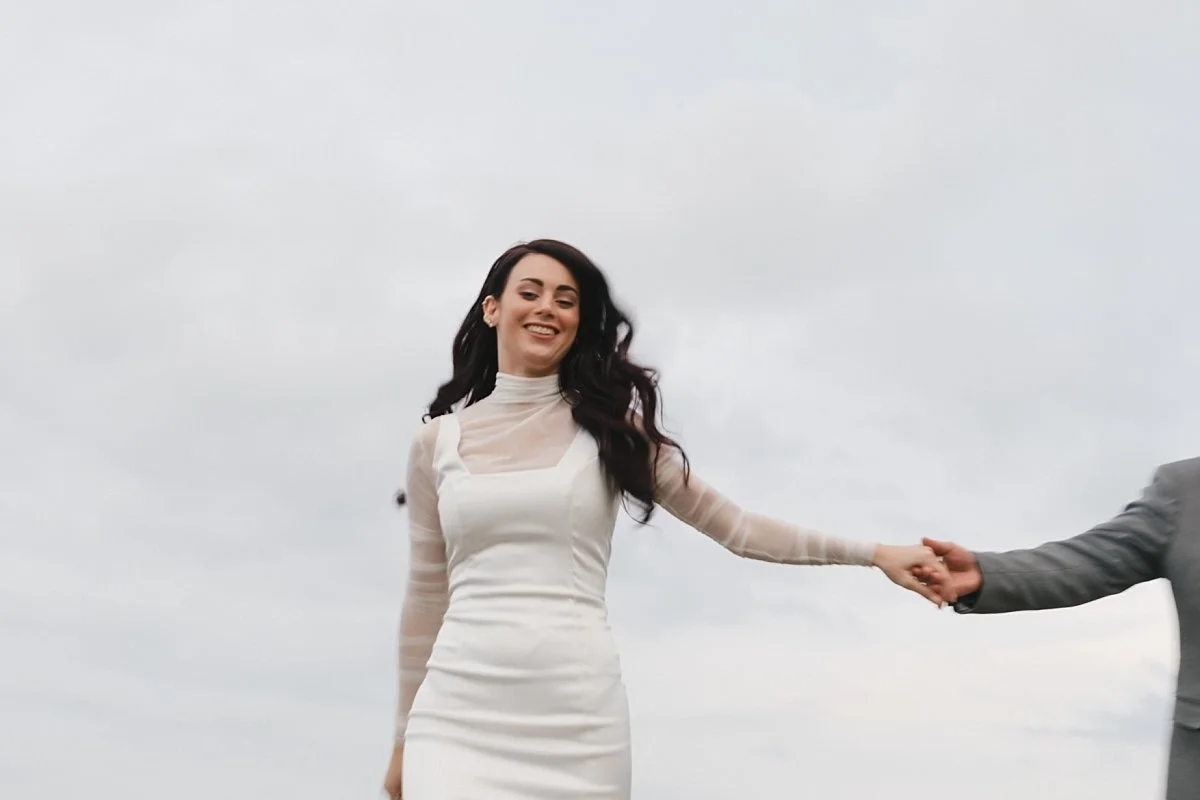
What Happens If It Rains on Your Wedding Day?
Worried about rain on your wedding day? Discover how umbrellas, covered areas and indoor locations can help you get beautiful wedding photographs in any weather.
Let's start with the obvious:
It might rain.
And while that's probably not what you pictured when you booked your venue, it doesn't mean your wedding photographs are ruined.
In fact, some of our favourite photographs can come from days that didn't go exactly according to plan.
Embrace it
If it's raining but the conditions are still manageable, embrace it.
Umbrellas can make for some really lovely photographs, particularly when you're willing to actually go outside rather than spending the entire day trying to avoid a single drop of rain.
You don't need to stand outside getting soaked for half an hour.
A few minutes is often enough.
Find somewhere beautiful indoors
If the weather really isn't cooperating, we'll find an alternative.
That might mean using a covered area at your venue, a beautiful indoor space, a veranda or simply working with whatever architecture and light your venue gives us.
We're not expecting your venue to have a perfectly styled indoor photo studio.
We're looking for good light, interesting spaces and opportunities to photograph you naturally.
Don't let the weather dictate the entire day
The biggest thing we'd recommend is not panicking when the forecast changes.
Your wedding isn't suddenly going to become a bad wedding because it's raining.
We'll adjust.
We'll move things around if we need to, look for opportunities between showers and make the most of whatever the day gives us.
And if the rain stops for ten minutes at the right time?
We'll probably be outside with you very quickly.
Your photographs don't need perfect weather
Perfect weather isn't necessarily the same thing as perfect photographs.
Rain, clouds, wind and dramatic skies can all add something to your photographs that a perfectly sunny day simply doesn't have.
So if your wedding forecast is looking a little questionable, don't immediately start Googling indoor wedding venues.
Bring an umbrella (preferably white/see-through), keep your plans flexible and let us figure out the photographs.
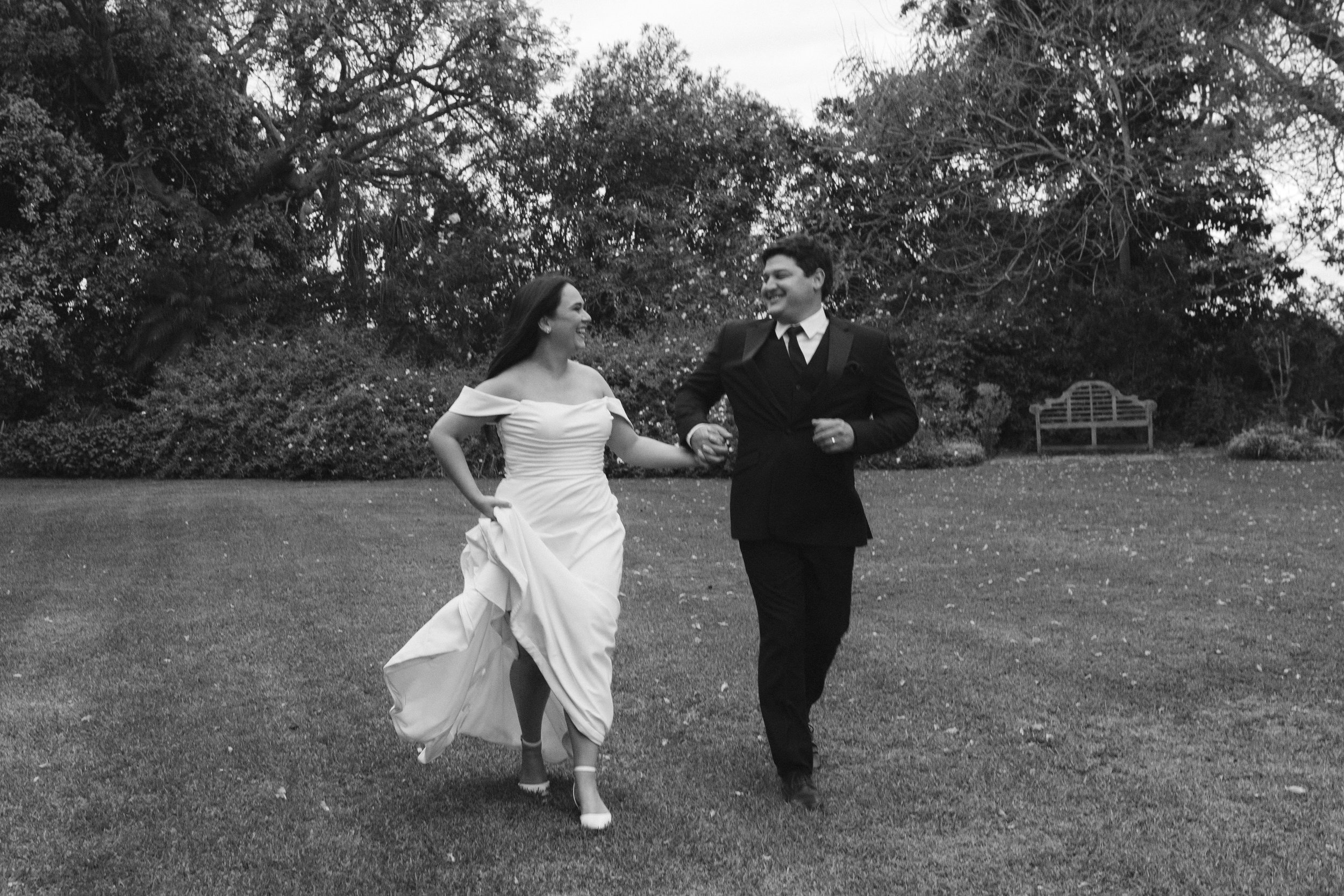
How to Plan Your Wedding Timeline Around Your Photography and Videography
Planning your wedding timeline? Learn how to organise getting ready, your ceremony, family photos, couple portraits and reception for a relaxed wedding day.
One of the easiest ways to make your wedding day feel rushed is to build the timeline around the ceremony and reception, then try to squeeze the photography in wherever there's a gap.
We prefer to do it the other way around.
Your photography and videography should fit naturally into the day, without taking you away from your guests for hours or making the whole thing feel like one long photoshoot.
Here's how we generally like to structure a wedding day.
Start with the venue & décor
We usually like to start with a little bit of time at the venue before everyone is ready.
This gives us a chance to photograph and film the venue, décor, reception details and all the little things that took months to organize while everything is still perfectly untouched.
If possible, ask your venue to have the reception completely set up before your photography starts. It means we can photograph everything properly before guests arrive and before handbags, jackets and half-empty wine glasses inevitably make their way onto the tables, if this doesn’t work for them then we suggest they don’t allow any guests to enter until we’ve had a chance to photograph it all after family photos.
The groom's preparation
We generally allow around 30–45 minutes with the groom and groomsmen.
This gives us enough time for some getting-ready photographs, groom details and relaxed photographs with the groomsmen.
It doesn't need to be a complicated production.
We're looking for the natural moments as everyone gets ready, along with a few photographs of the groom and his friends together.
Give the bride a little more time
For bridal preparation, we generally allow around 1½ hours.
There's simply more going on.
Hair and makeup are usually still being finished, the dress needs to go on, there are bridal details to photograph and there are often photographs with bridesmaids, parents or whoever is helping the bride get ready.
It also gives us some breathing room.
We're not interested in making you rush through those final moments because we've only allowed 45 minutes for everything.
The ceremony
Once everyone is ready, we move into the ceremony.
This is one of the reasons we like to have a proper timeline in place beforehand, to know exactly what we're working towards.
The ceremony itself obviously determines how much time we have afterwards, but we generally want to move through the post-ceremony photographs efficiently rather than keeping you away from your guests for an hour and a half.
After the ceremony: family, bridal party and couple photographs
This is the part of the day where a little planning makes a big difference.
Our general guideline is:
30 minutes for family photographs
30 minutes for bridal party photographs
30 minutes for couple photographs
Those are not necessarily three full 30-minute sessions and not necessarily on top of each other.
We generally try to work much faster than that and allow you some time to say hello to some guests and have a moment.
The extra time is just there to give us some breathing room for organising people, moving between photographs and dealing with the inevitable “Where's Dad?” moment.
Family photographs
We recommend deciding on your important family combinations before the wedding.
Keep the list relatively short and specific.
The more combinations you add, the longer this part of the day takes.
Having someone who knows both families available to help round people up is also incredibly useful.
Canapés and cocktail hour
Once the main formal photographs are done, you should actually get to enjoy your wedding.
This is when we photograph things like:
You celebrating with your guests
Canapés and drinks
Candid guest interactions
The venue and reception space
Little moments happening around you
After family photographs we encourage this time so you can spend this time with everyone rather than disappearing for another round of photographs.
Bridal party photographs
These don't need to be overly formal.
We'll get a few organised photographs, but we'll also keep things relaxed and moving.
And if you want to save time later, bridal party photographs can often be done before the ceremony.
This can make a big difference to the amount of time you spend away from your guests after you've said “I do”.
Couple photographs
This is where we get some proper time with the two of you.
We'll take some more intentional portraits, but we're not looking to spend your entire cocktail hour posing.
We'll give you some direction where needed and then let things happen naturally.
And importantly, the time of day matters.
If your ceremony is later in the afternoon, the light immediately after the ceremony might be perfect for your couple photographs.
If you want to shoot them before ceremony during a first look, we can plan around that.
This is one of the reasons we don't think there's one perfect wedding timeline that works for everyone.
The reception
Once everyone moves into the reception, the timeline becomes much more dependent on your venue and how you want your evening to flow.
A fairly typical order might look something like:
Newlywed entrance
You make your entrance while everyone is gathered.
Cake cutting
If you want to do a cake cutting, doing it early can be a good way to get it out of the way while everyone is already together.
Welcome and opening formalities
This can be kept short and simple.
Speeches
If you have a lot of speeches, consider asking the speakers to cap them to 5 minutes so everyone doesn’t have to sit through a long block of talking before they get to eat.
If they want to say more ask them to write it in the form of a letter and give it to you to keep.
Dinner
This is where everyone gets to relax, eat and actually enjoy themselves.
We don't need to photograph every mouthful.
First dance and opening of the dance floor
Once the formalities are finished, we generally recommend getting the first dance done and opening the dance floor rather than letting the party lose momentum with another formaility.
Don't feel like every formal photograph needs to happen during your reception
There are certain traditions that can be moved around or left until later.
Bouquet and garter tosses are a good example.
We don't usually see a need to build them into the formal reception timeline.
If you really want them photographed, they can be done.
Otherwise, save them for a time later in the evening when the dance floor needs a bit of a boost.
Or they're perfectly fine to skip.
Your wedding doesn't need to contain every single traditional wedding activity simply because it's on a wedding checklist somewhere.
Summer and winter timelines will look different
There isn't one perfect ceremony time.
In summer, you have much more flexibility with daylight and can push things later.
In winter, you'll want to pay much closer attention to when the sun is going down, particularly if you want beautiful natural-light couple photographs.
The same timeline also won't work for every venue.
If you're travelling between your getting-ready location, ceremony and reception, we'll need to build that travel time into the day.
That's why we recommend working backwards from the parts of the day that matter most to you rather than copying someone else's wedding timeline exactly.
The goal isn't to photograph every minute
The goal is to have enough time for us to do our job without your wedding feeling like a photoshoot.
We'll photograph the details, the people, the big moments and all the little things happening around them.
We'll also give you some direction when it's needed.
But most of the day should simply be you getting married and enjoying yourselves.
A good wedding timeline gives you enough structure that you don't have to think about the photography and videography at all.
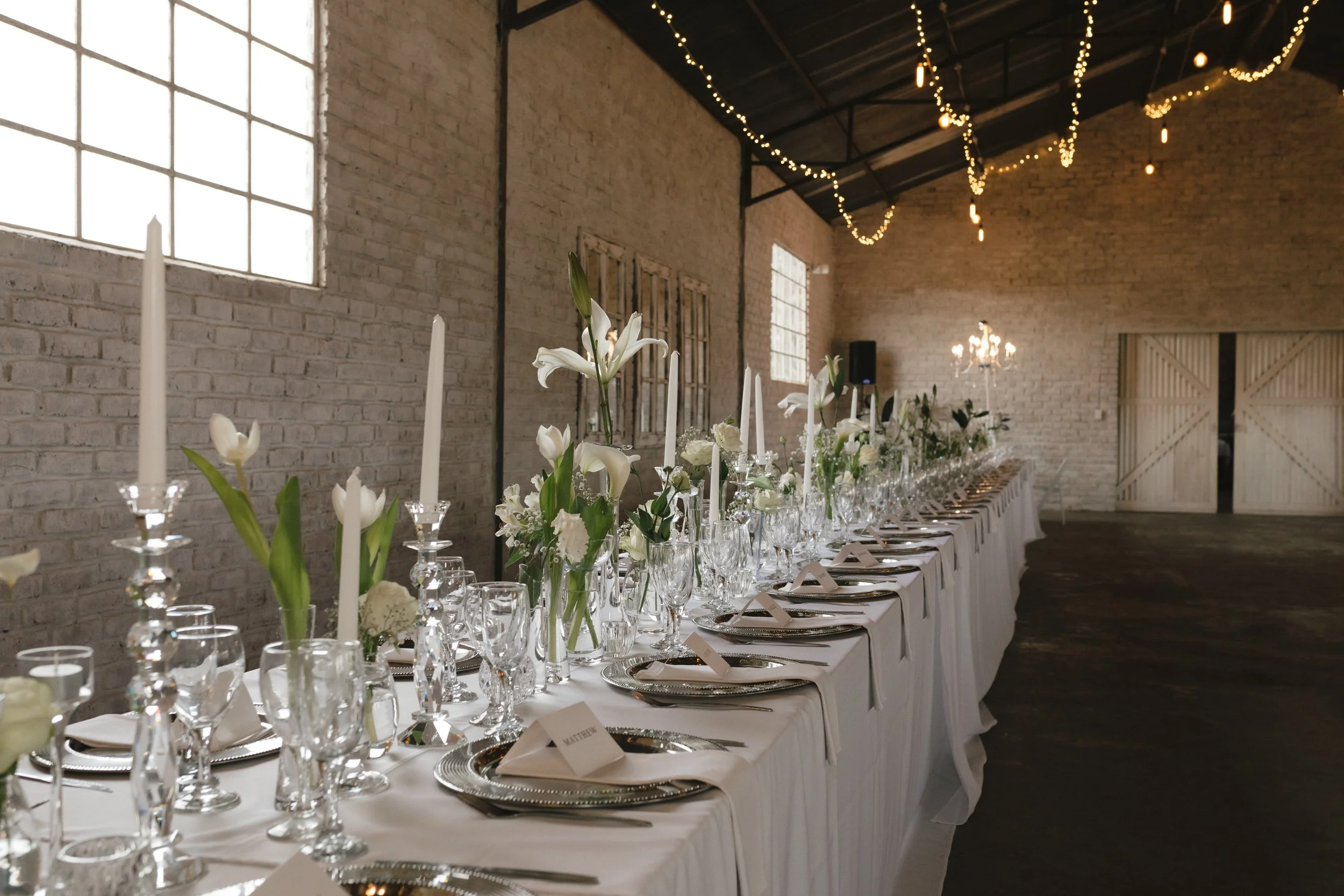
How Many Hours of Wedding Photography Do You Actually Need?
It All Begins Here
When you're looking at wedding photography packages, one of the first questions you'll probably run into is: how many hours of photography do we actually need?
The answer depends less on the size of your wedding and more on how your day is structured.
As a general rule, we recommend 8 hours as a good starting point, but there are a few things that can push you towards 9 or even 10 hours.
8 hours: enough for a relatively straightforward day
If your getting-ready location, ceremony and reception are all fairly close together, 8 hours can cover a lot of ground.
It gives us enough time to photograph the important parts of the day without spending hours hanging around waiting for things to happen.
For example, an 8-hour wedding could comfortably cover:
Getting ready
Details and a few portraits
The ceremony
Family and bridal party photos
Couple photos
Canapés and some guest photos
Reception details
Speeches and/or the beginning of the party
If everything is happening in roughly the same area and the people in charge are conscious of the time and timeline, you don't necessarily need to pay for hours you won't really use.
9 hours: a little more breathing room
If you'd rather not have the day feel quite so tightly packed, 9 hours is a really comfortable option.
That extra hour can make a surprisingly big difference.
It gives you a little more room if hair and makeup run late, guests take longer to organise for family photos, or you simply want us to stay for a little more of the reception.
It's also a good option if your locations aren't right next to each other but aren't particularly far apart either.
10 hours: when there's travel involved
If your getting-ready location, ceremony and reception are spread out across different locations, 10 hours is often the better choice.
Travel takes time and unfortunately your wedding photographer can't photograph you while they're driving down the road.
If you're getting ready in one town, getting married somewhere else and then heading to a reception venue another distance away, those gaps need to be accounted for.
So, what should you book?
Our general rule of thumb is:
8 hours → Locations are close together and your day is relatively straightforward.
9 hours → You want a little more breathing room and don't want the timeline to feel rushed.
10 hours → There is significant travel between locations.
And if you're still unsure, don't feel like you need to work it out by counting every single minute yourself. Send us your rough wedding-day plan and we'll happily tell you what we think makes sense.
More hours aren't automatically better. The goal is to have enough coverage to tell the story of your day without having a photographer following you around simply because you've paid for the time.
How Much Time Should You Allow for Wedding Photos?
How long should you allow for family, bridal party and couple photos? Learn how to plan your wedding photography without spending hours away from your guests.
One of the easiest ways for wedding photos to take over your timeline is to underestimate how long it takes to organize people.
Nobody wants to spend an hour standing in a line waiting for Uncle Whoever to find his shoes.
Our general recommendation is to allow around 30 minutes for family photos, 30 minutes for bridal party photos and 30 minutes for couple photos.
That doesn't mean we actually want to spend 90 minutes taking posed photographs. Quite the opposite.
We generally try to get through these photographs as efficiently as possible so you can get back to enjoying your wedding.
Family photos: allow around 30 minutes
Family photos are usually the most time-consuming because, well... families.
Someone is always in the bathroom. Someone doesn't hear their name. Someone has wandered off to get a drink.
We recommend letting the people who will be in the photos know they need to stick around as well as making a short, organised list beforehand and having someone who knows the family help round people up.
The actual photographs don't need to take 30 minutes. The extra time gives us some breathing room for organising everyone if they forgot their place.
Bridal party photos: around 30 minutes
Again, we don't want to spend half an hour making everyone stand perfectly still.
We usually work through a combination of a few organised photographs and more natural interaction.
And if you've already done some of these photographs before the ceremony, even better.
Couple photos: around 30 minutes
Thirty minutes gives us enough time to get a good variety of photographs without making you feel like you've disappeared from your own wedding.
We'll get some beautiful portraits, but we're also looking for the moments in between, you finally getting to enjoy each other, go for a walk together, talk to each other and generally forget that we're there.
One of our favourite ways to save time
If you're happy to see each other before the ceremony, doing your bridal party and couple photos beforehand can save a huge amount of time later in the day.
Instead of finishing your ceremony and immediately disappearing for photographs while your guests wait, you can get straight into canapés, drinks and celebrating with everyone.
It also means that after the ceremony, we can keep the remaining family photographs quick and get you back to your guests.
The important thing
These timings are guidelines, not rules.
We're not going to arrive with a stopwatch and announce that your 30 minutes are up.
The whole point is to have enough time built into the day that photographs don't become stressful.
The less rushed you feel, the better your photographs tend to be.
Do You Need Two Wedding Photographers?
Wondering if you need a second wedding photographer? Discover when one photographer is enough, when two can help, and what to consider when booking video too.
The short answer?
Probably not.
There are definitely weddings where having two photographers makes sense, but we don't think every wedding automatically needs a second photographer.
For an 8-hour wedding, one photographer can cover a lot
If your wedding is relatively straightforward and your locations aren't spread all over the place, one photographer can comfortably document the day.
You'll still get the important moments, candid photographs, portraits, details, family photographs and everything happening around you.
In fact, there are some advantages to having one photographer.
There's less equipment, less movement and fewer people around you.
And that's something we particularly like.
What if you're booking videography too?
If you’re booking videography, we're even less likely to recommend having another photographer simply for the sake of having more people there.
You've already got two people documenting the day that know how to work with and around eachother.
Adding another photographer can sometimes make the whole thing feel a little crowded. Particularly during the ceremony, speeches and getting ready.
We prefer to keep things uncrowded and inconspicuous wherever possible.
When does a second photographer make sense?
There are situations where having a second photographer can be useful.
For example, if:
There are multiple things happening simultaneously
Your wedding is particularly large
You specifically want more angles and coverage throughout the day
In those cases, a second photographer can absolutely be worthwhile.
But you don't need one just because it's an option
We don't believe in adding people to your wedding day simply because we can.
Our aim is to document the day properly while staying as unobtrusive as possible.
That's why, for a typical 8-hour wedding, we generally recommend sticking with one photographer.
And yes, we do offer a second photographer if you want one. We just don't think it's essential for every wedding.
Sometimes less really is more.